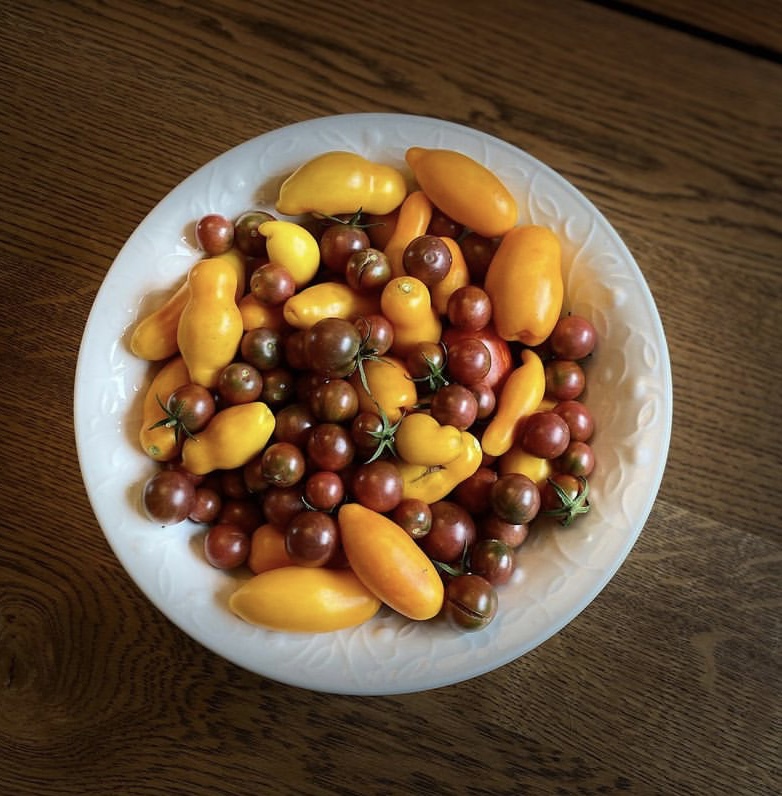
A couple of months ago, a young, popular chef on social media captioned a post with: “Tomato season!”
My immediate thought was: Oh no, honey.
And while it’s very likely, in our globalized social world, to find someone who is located in a completely different growing season, this person’s climate is actually quite similar to mine.
And it definitely was not tomato season. At least, not in the way that she meant it.
I think part of the confusion comes from how we experience food now. We tend to picture farmers’ markets as small farms, outdoor growing, local food, and produce that has travelled a very short distance to get to us.
But there’s a very good chance that tomatoes that appear in stores or markets very early in the season may have been grown almost entirely indoors, often in hydroponic systems. Can those still be small businesses? Sure. But it probably isn’t quite the picture of a small outdoor farm that you might have in your head.
The era following the Victory Gardens, industrialization, modern grocery distribution chains, and the decades that followed got us used to eating what we want, when we want it. We can have a Greek salad because the tomatoes can be purchased at the same time as the cucumbers, and we can find black olives, pitted and ready to go, in the pantry section.
In truth, a lot of our recipes don’t match the growing patterns of our local environments.
But I digress.
Because it really is tomato season now. And I have a lot of tomatoes coming.
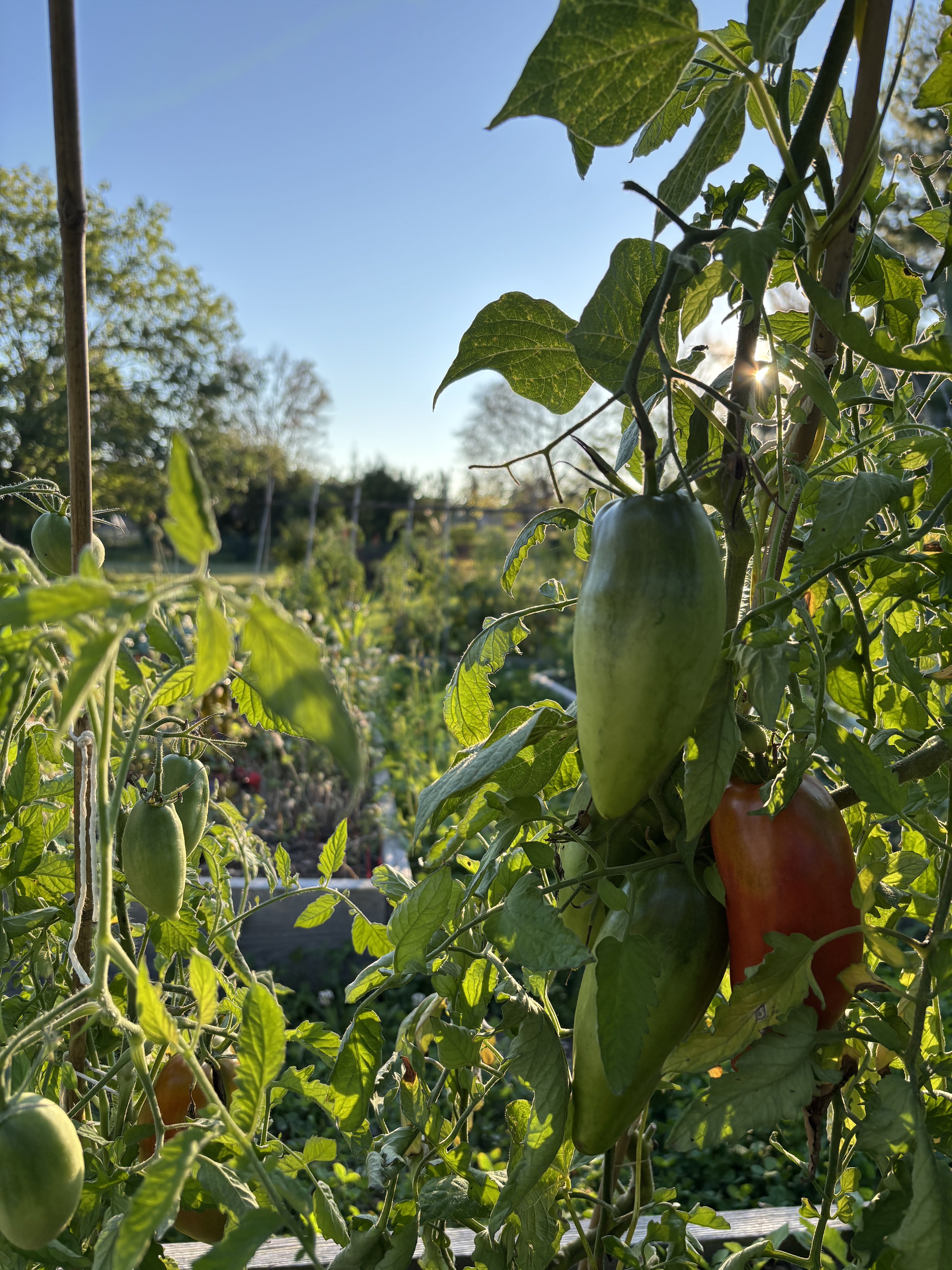
Of my ten garden beds (eleven if you count the potatoes stashed at my parents’ place), three of them are devoted to tomatoes. There are somewhere around 60–70 tomato plants out there.
This is because at some point, I decided I was more Italian than my partner.
My partner’s mother was first-generation Italian, born to the immigrants who arrived in groups and large families, and settled in places like Chicago, and Ontario communities like North Bay, the Sault, and Hamilton. Her family originated in Calabria, in southern Italy, and my portions of my partner’s early childhood as the youngest cousin, was spent underfoot in busy kitchens with aunts and uncles, overhearing Ital-English and tasting fried things.
But my partner’s father was a staunch British military man, and thus his wife cooked British food. Dumplings. Roast.
My partner has spent his life living in the moment, with something far shy of my deep interest in ancestry and origin and the land, failing to fully appreciate the clear benefits of claiming kinship with a culture of superior kitchen prowess.
But oh — when you find the right tomato sauce recipe, made from homegrown tomatoes, and you eventually get used to a sauce with less sugar, well…
My thinking is that you can convince anyone.
Aside from the 2025 summer of drought, I’ve been lucky enough to have whole years when I didn’t have to buy pasta or pizza sauce. It’s still one of the only things in my garden where I’ve put the work in to document the required quantities for my family almost exactly, from seed to sauce. (recipe shared below)
Tomato season is a season of watching and harvesting.
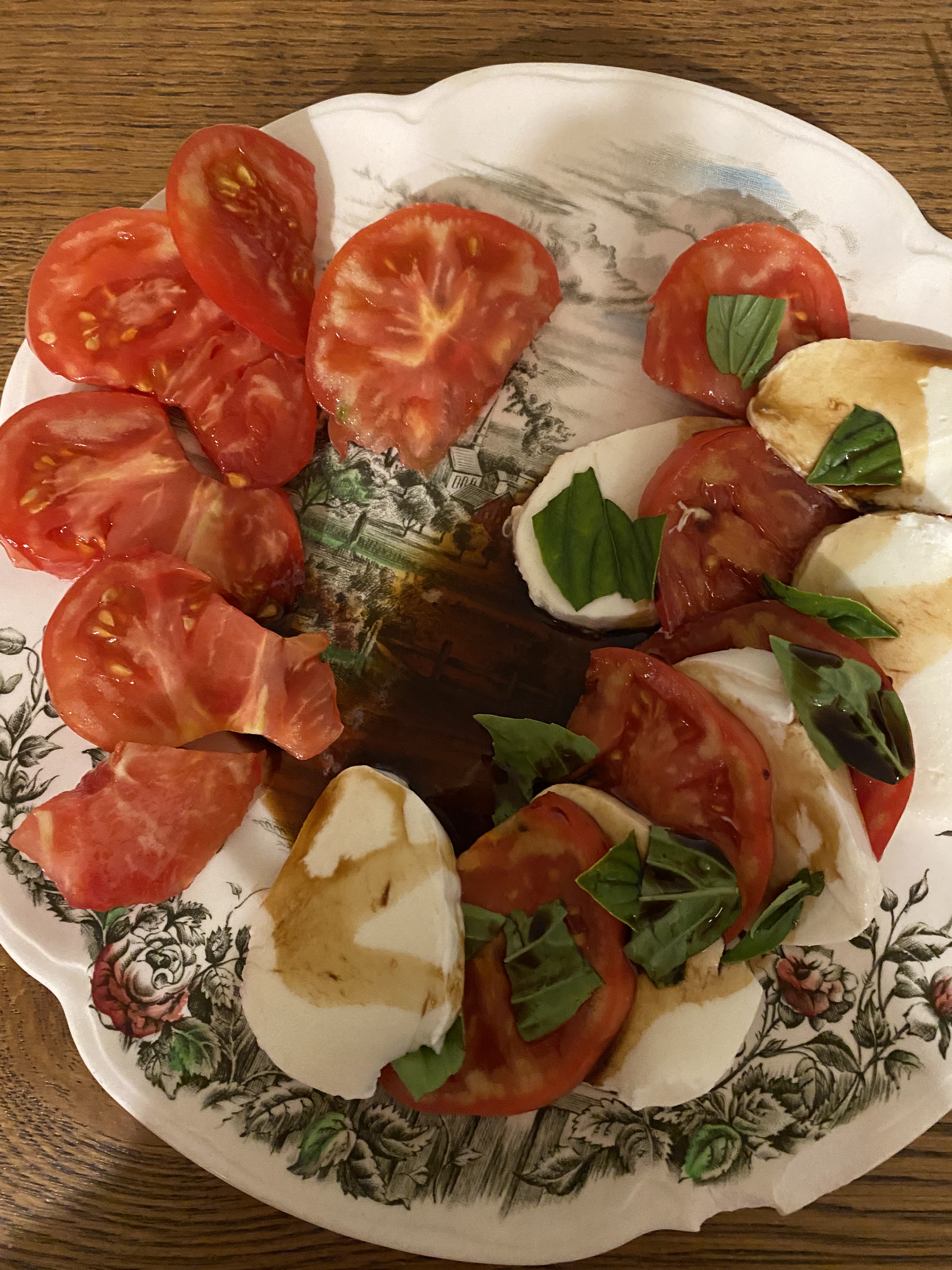
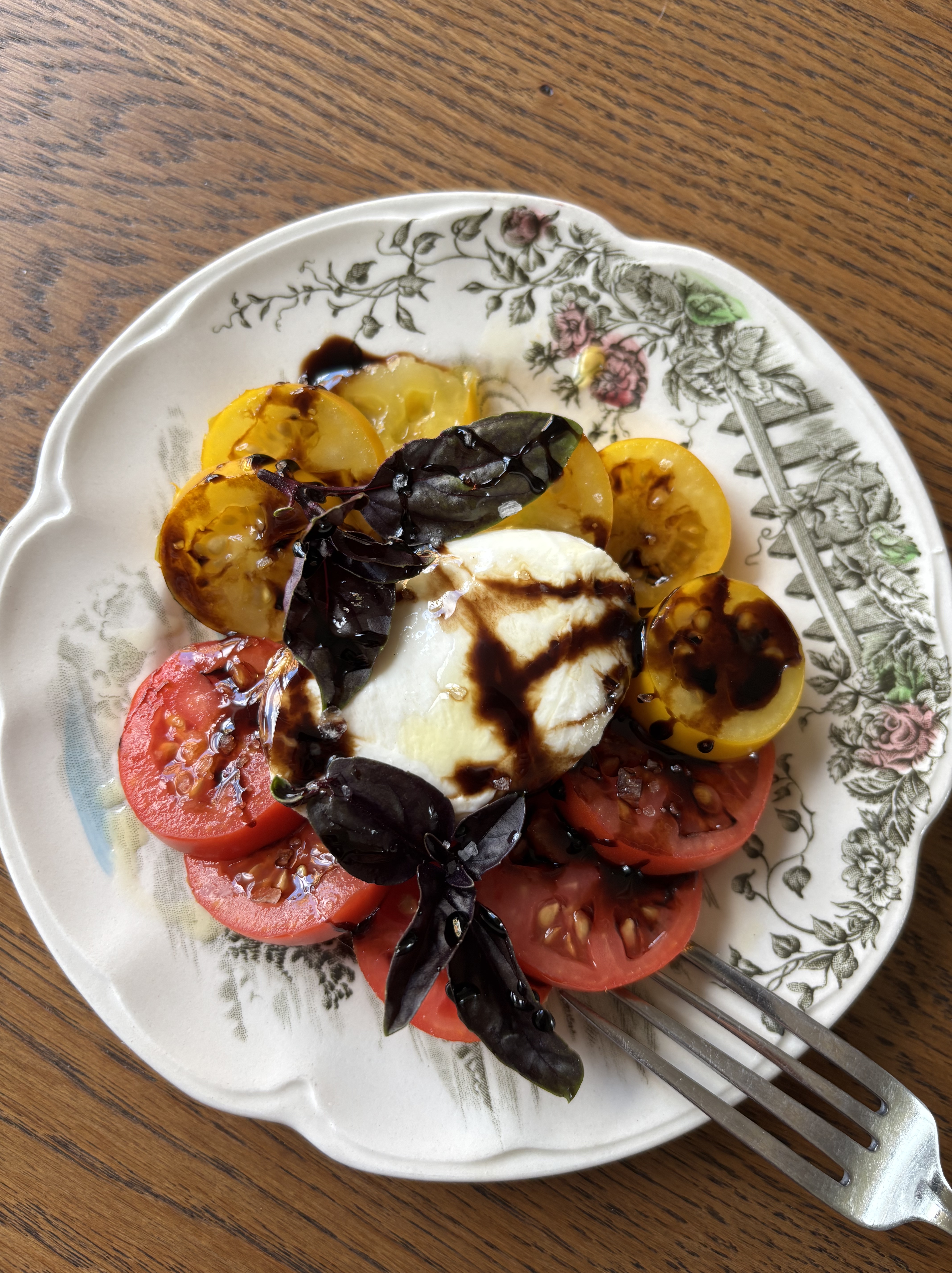
And eating Calabrese salad.
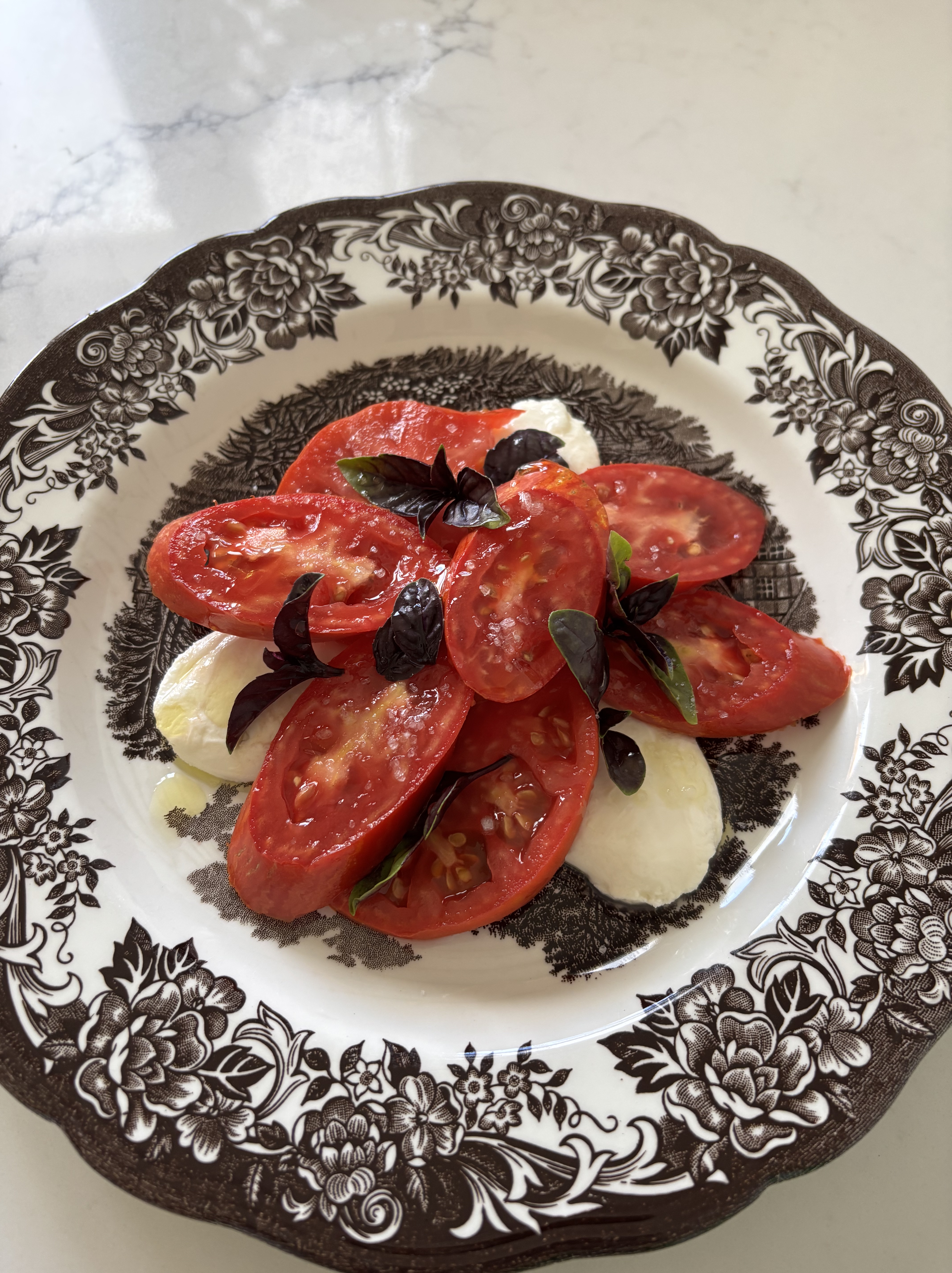
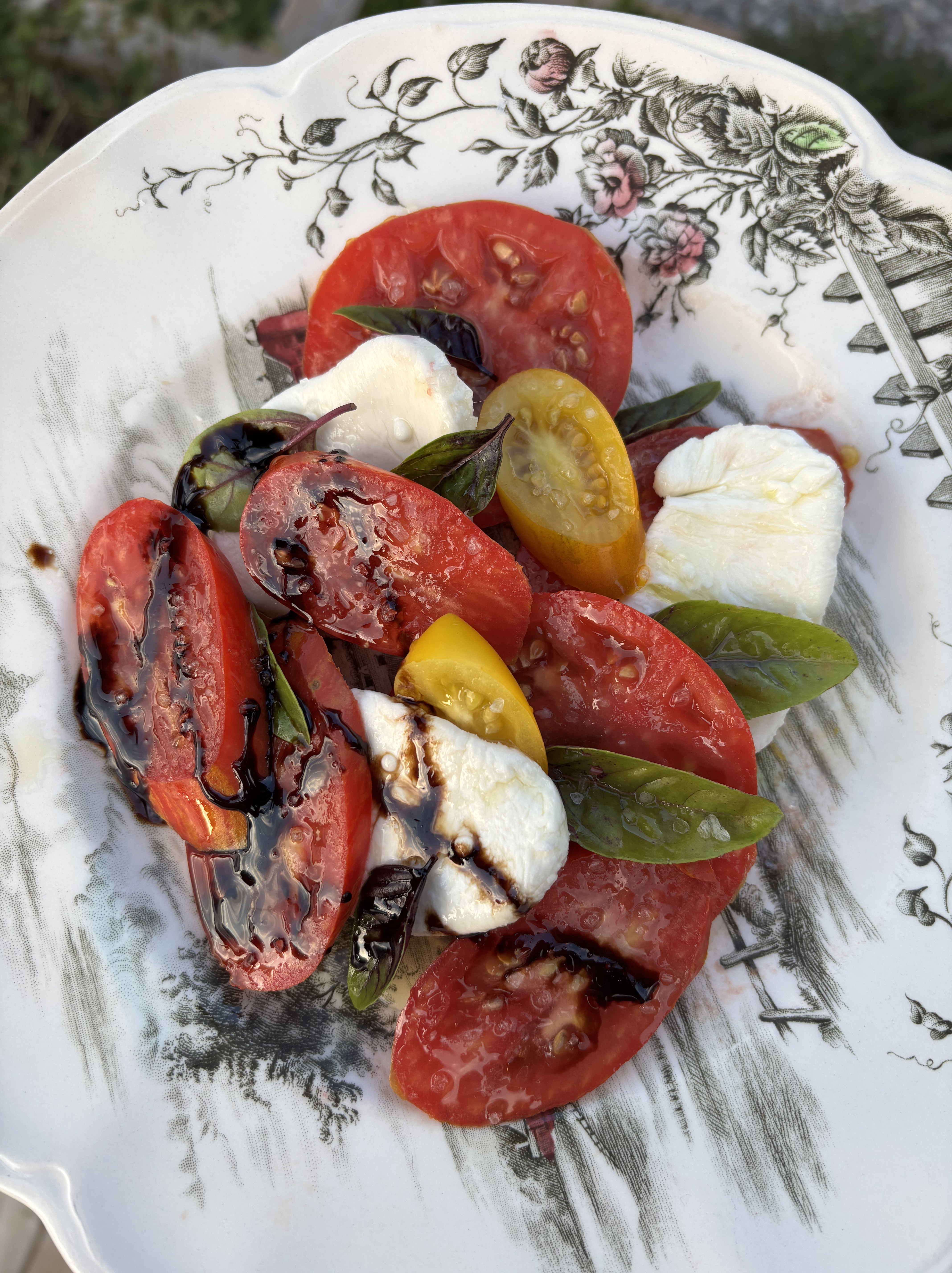
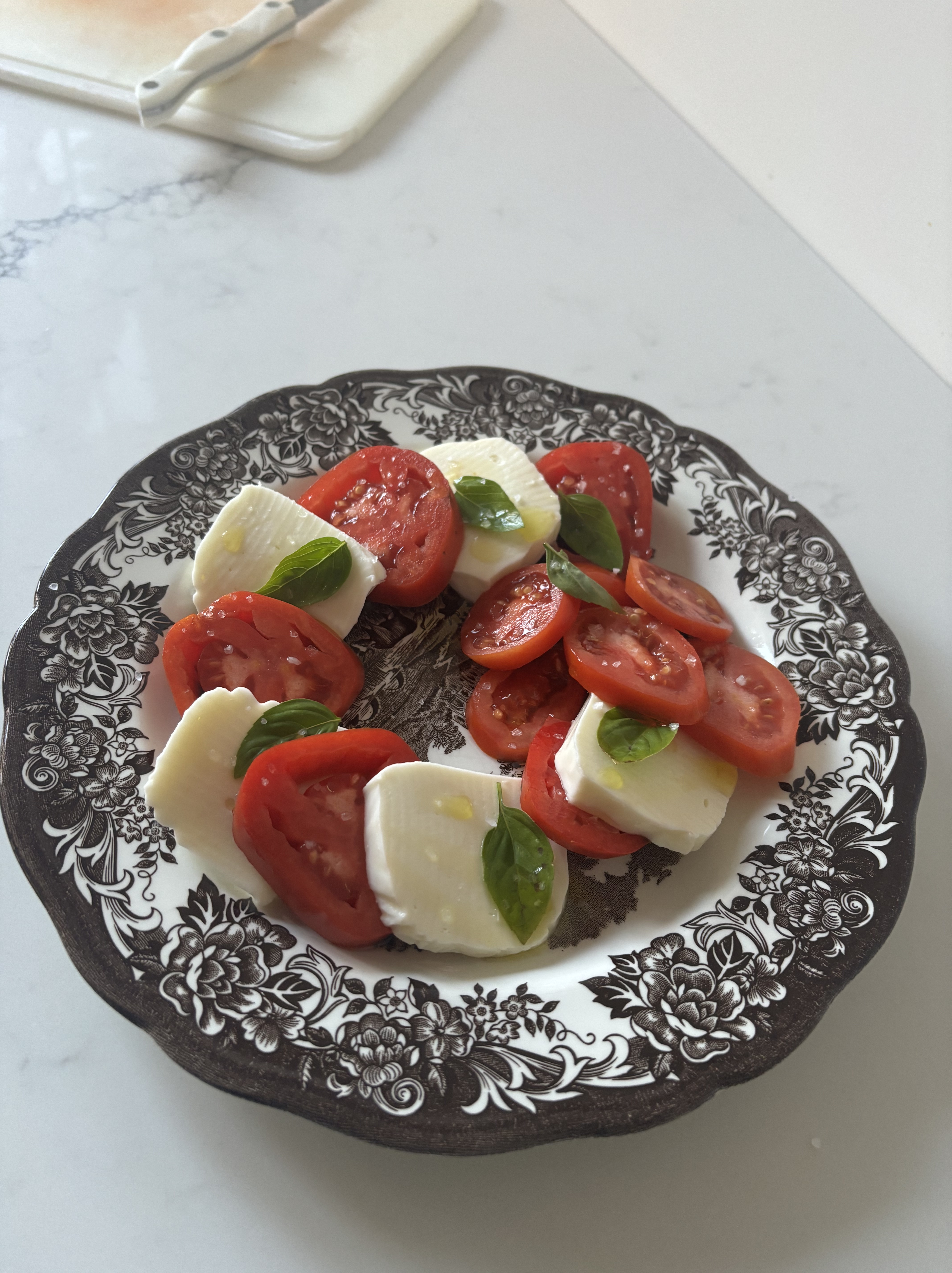
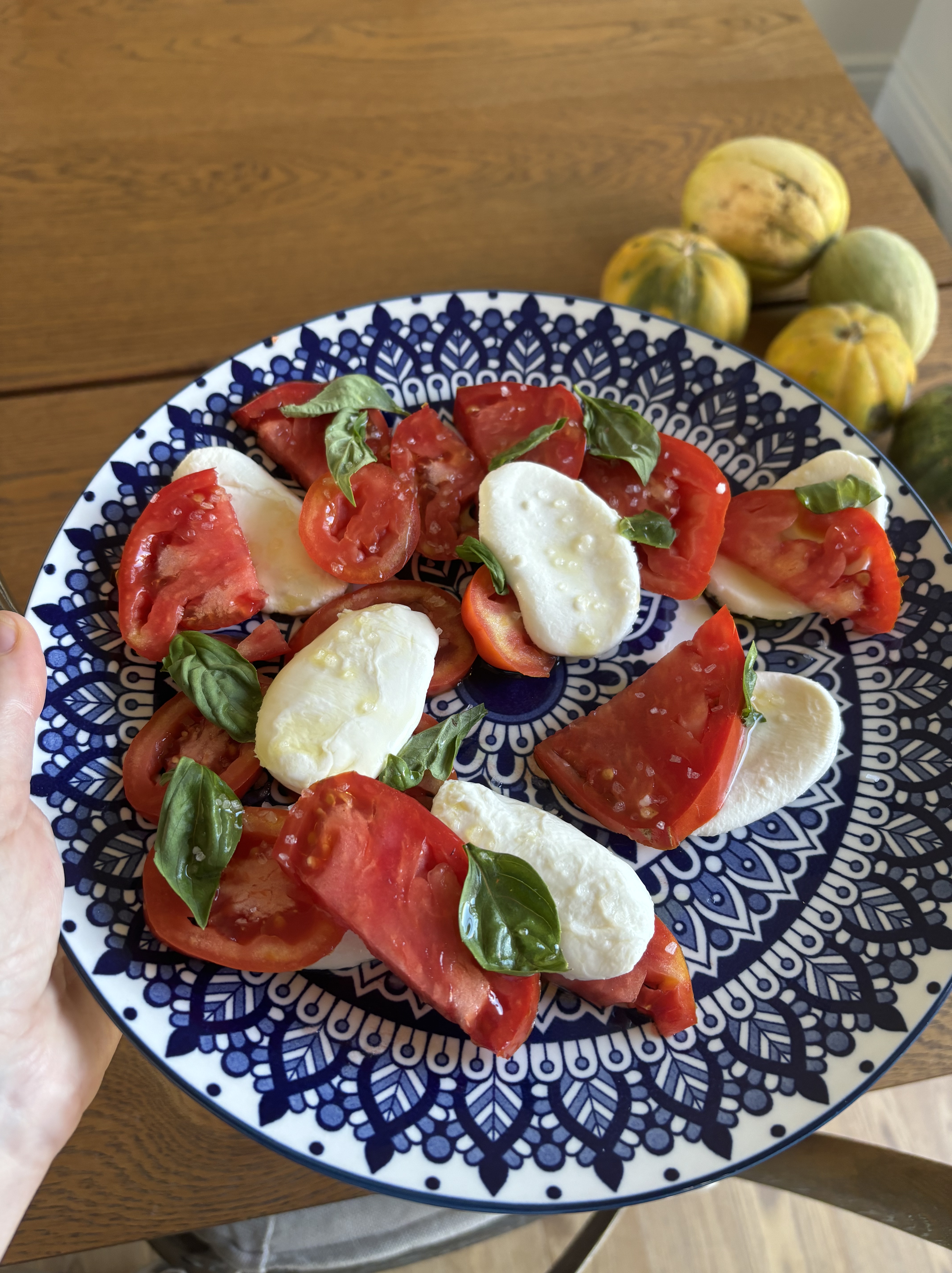
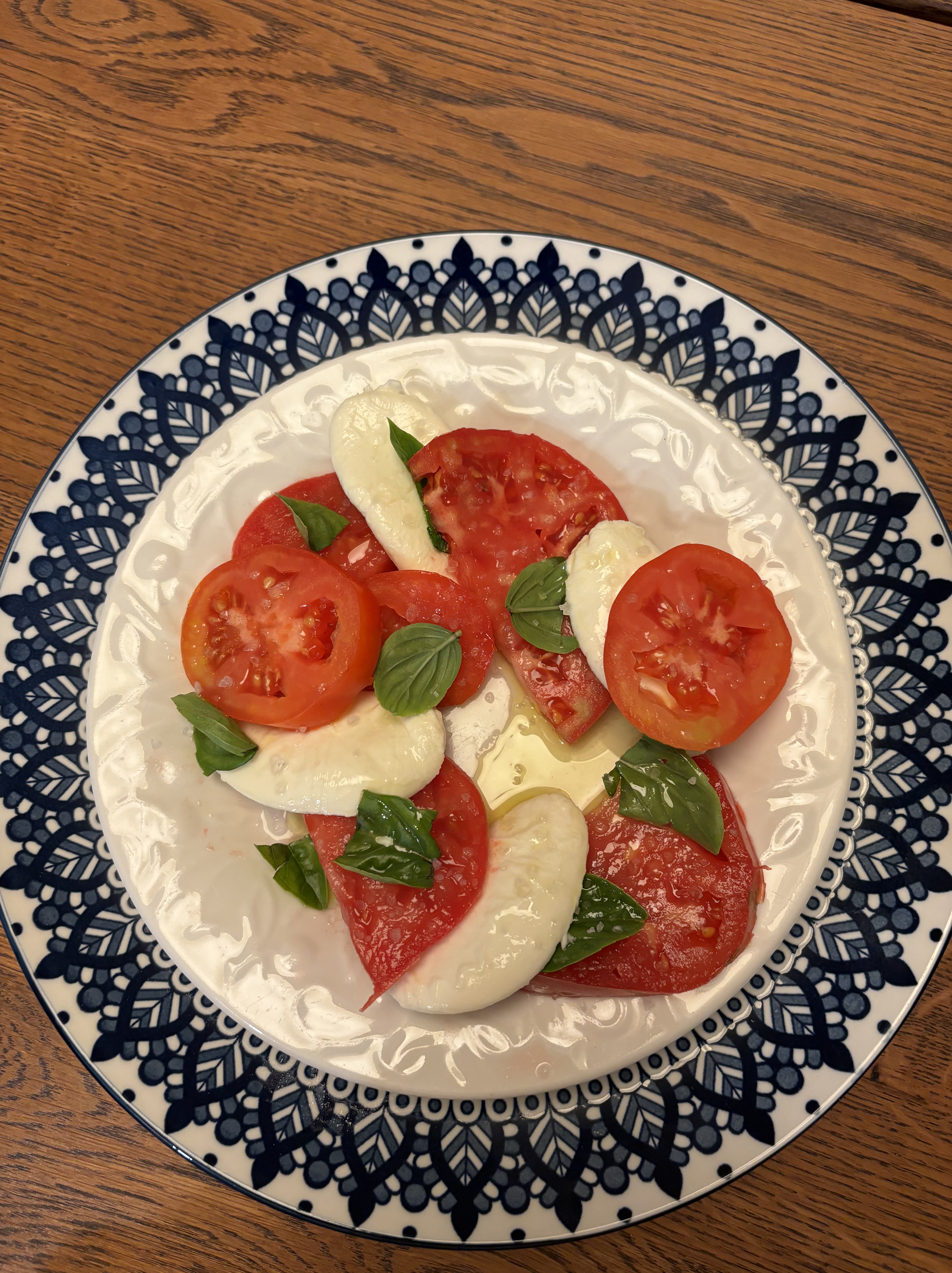
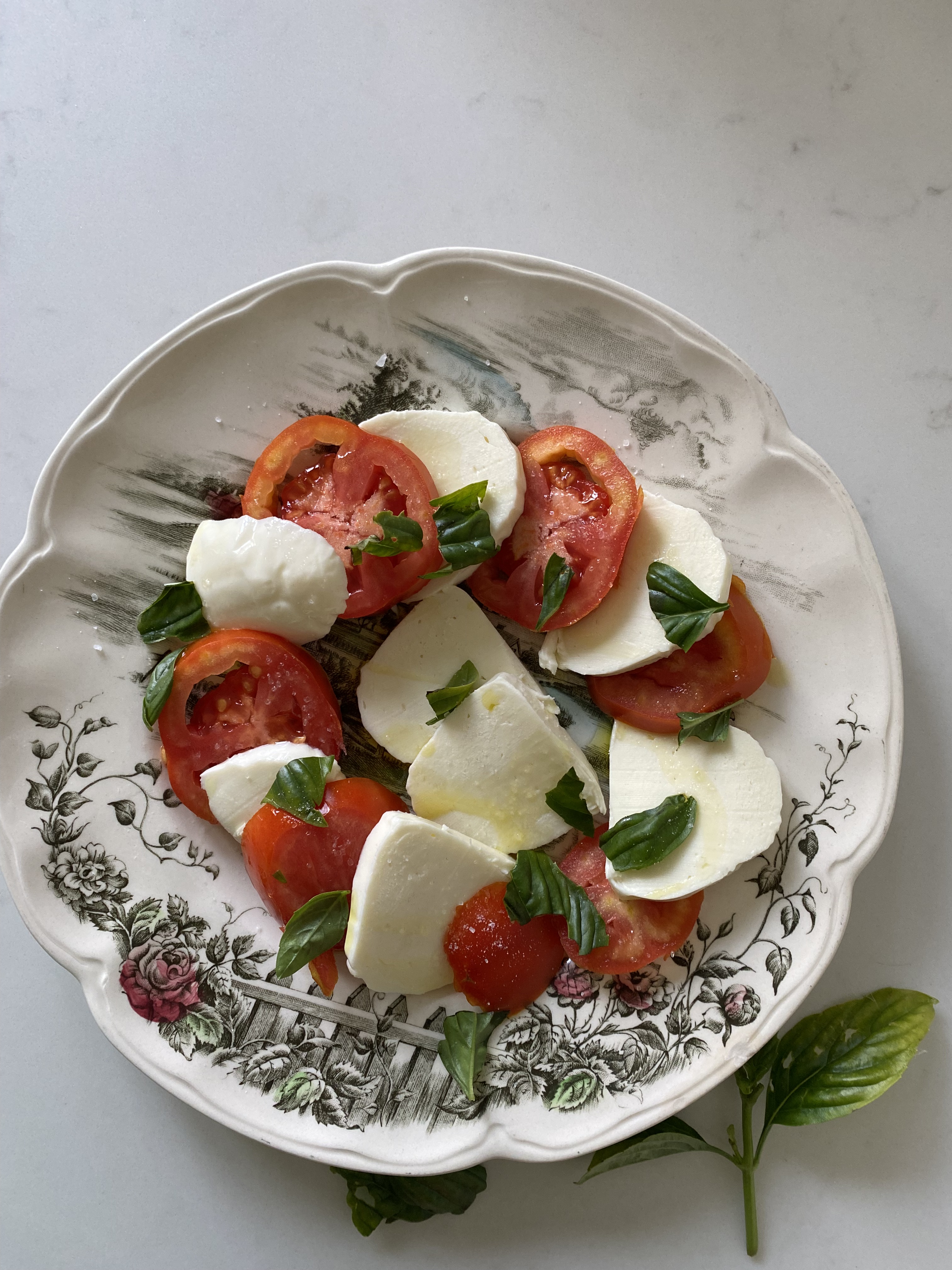
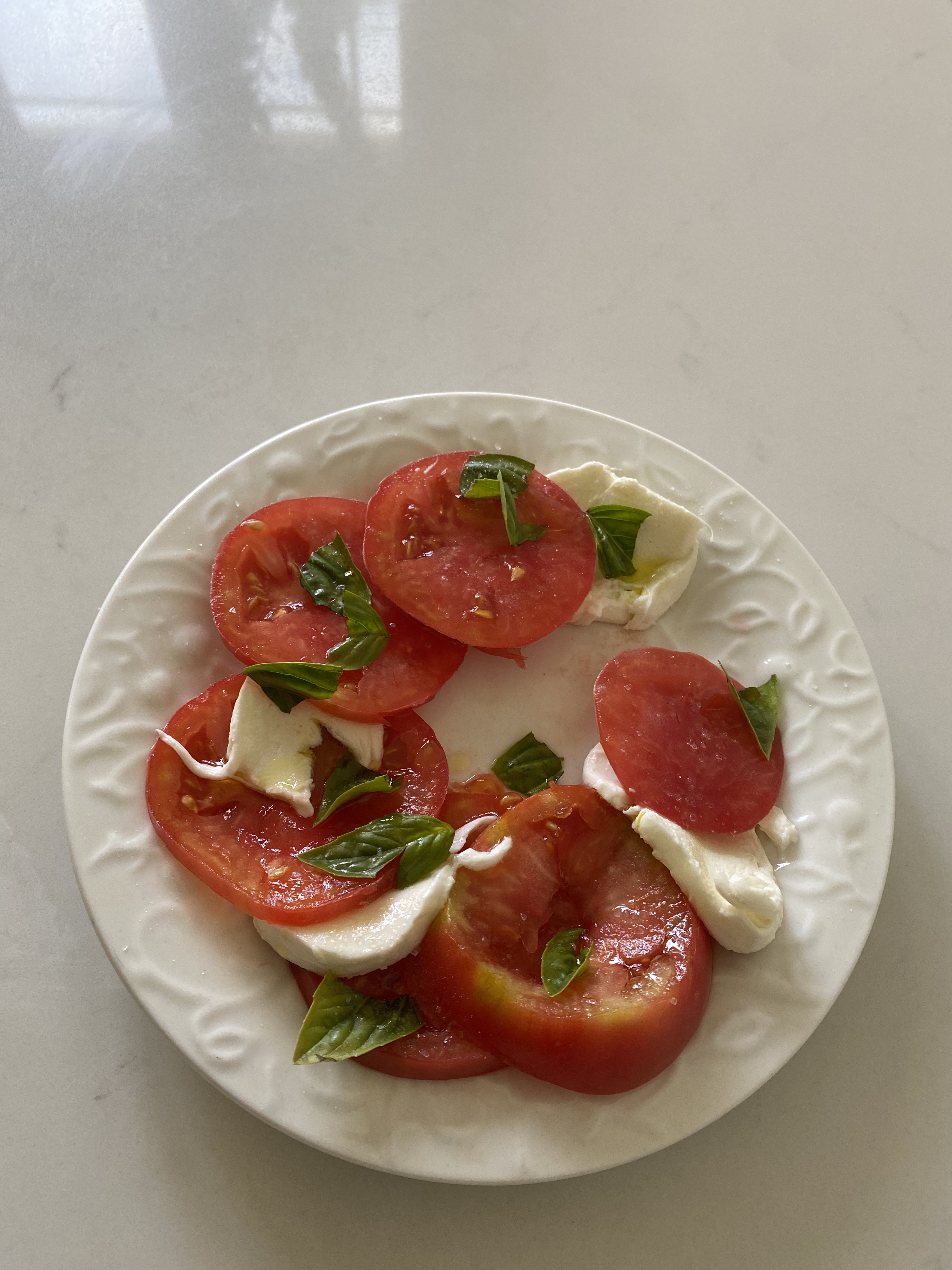
I used to be overwhelmed by making sauce one jar at a time, as they ripen. But I have a trick now: I freeze the tomatoes as I go, coring them first. When I’m ready to use, I simply pull bags of frozen tomatoes out of the freezer, run them under water so the skin falls off, and make a big batch of sauce.
What a luxury it is to make the sauce on a chilly weekend in late fall, when the garden has been put to bed, with the kitchen smelling delicious and when there’s finally time to spend in the kitchen again.
My love of the food of Italy (anglicized though it may be) likely has links to an appreciation for country food, making the best of what you have, living close to the land and eating fresh. And I’m sure it was solidified by a trip I took about three years ago.
I was lucky enough to travel to southern Italy with my dad and my sons. It was a once-in-a-lifetime kind of adventure. If you’re considering a european trip, I really can’t recommend it enough. Please don’t hesitate to ask me about https://www.ilfalcodelcilento.it/le-nostre-camere/.

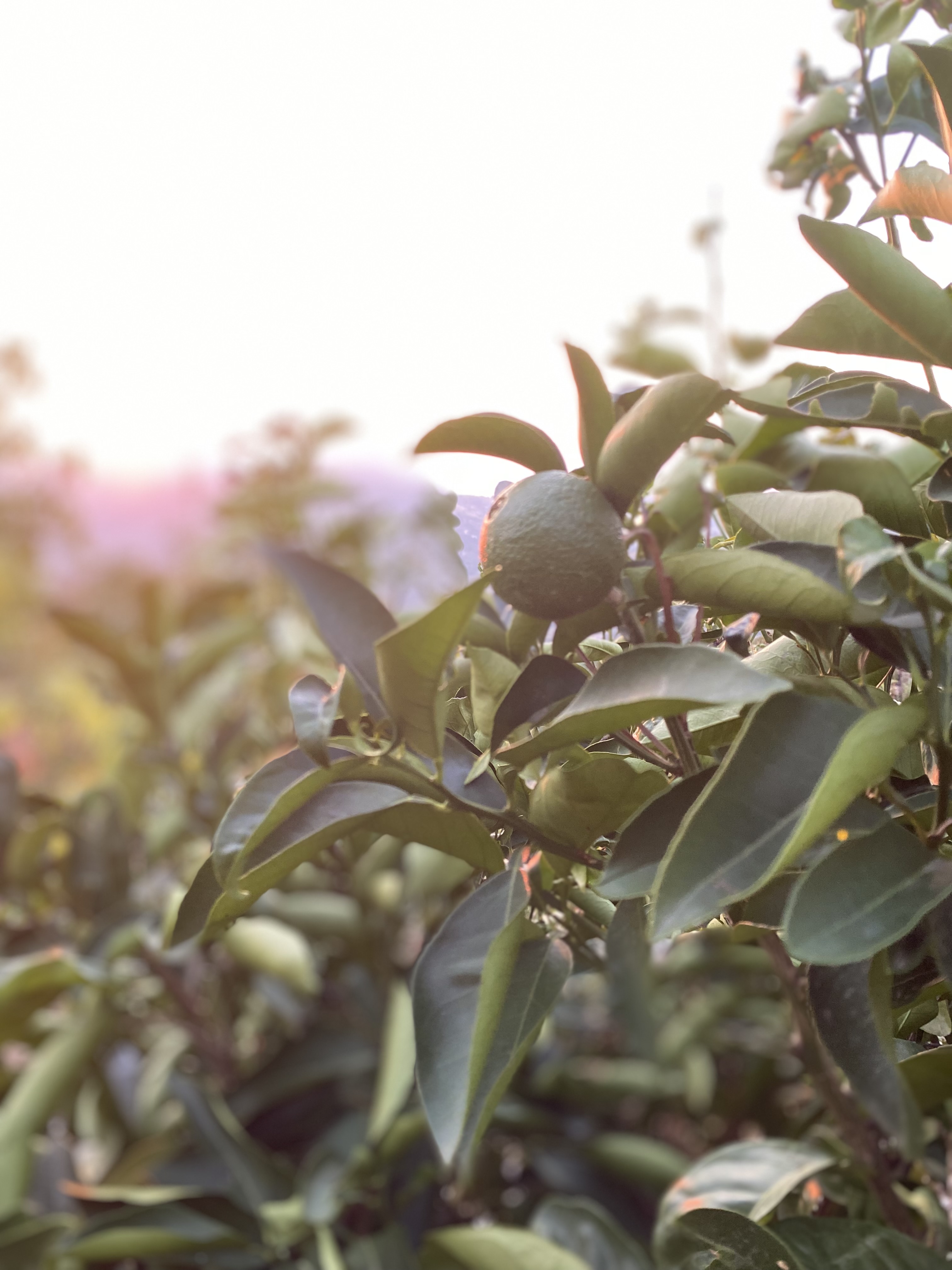
Il Falco Del Cilento – bed and breakfast
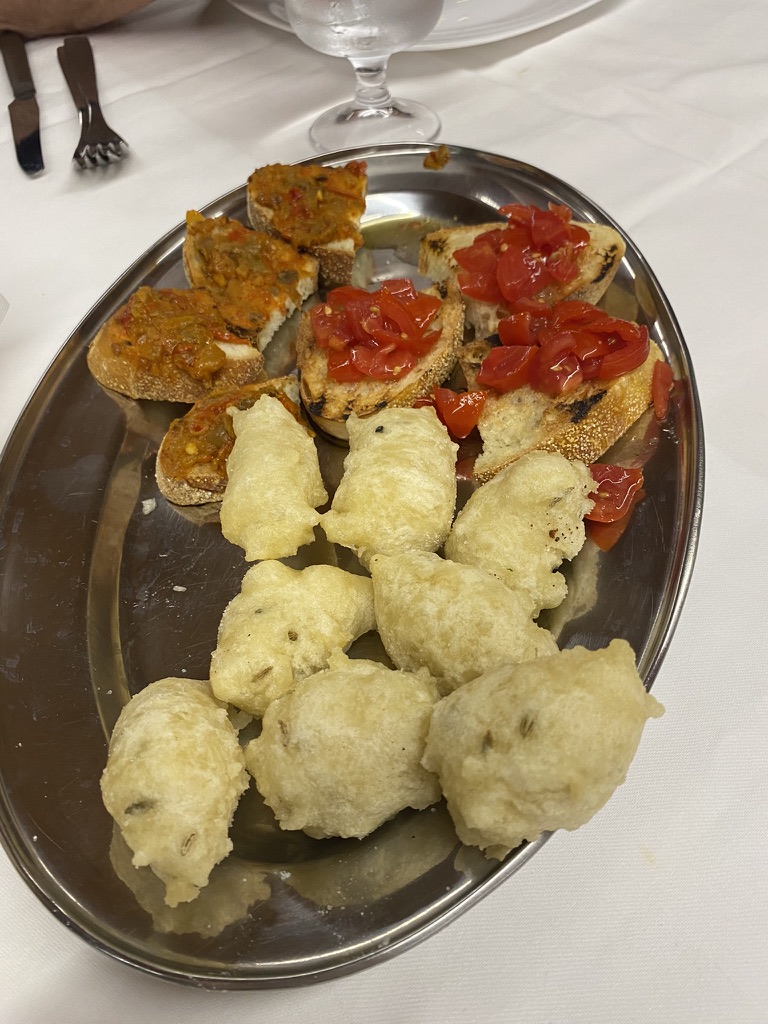
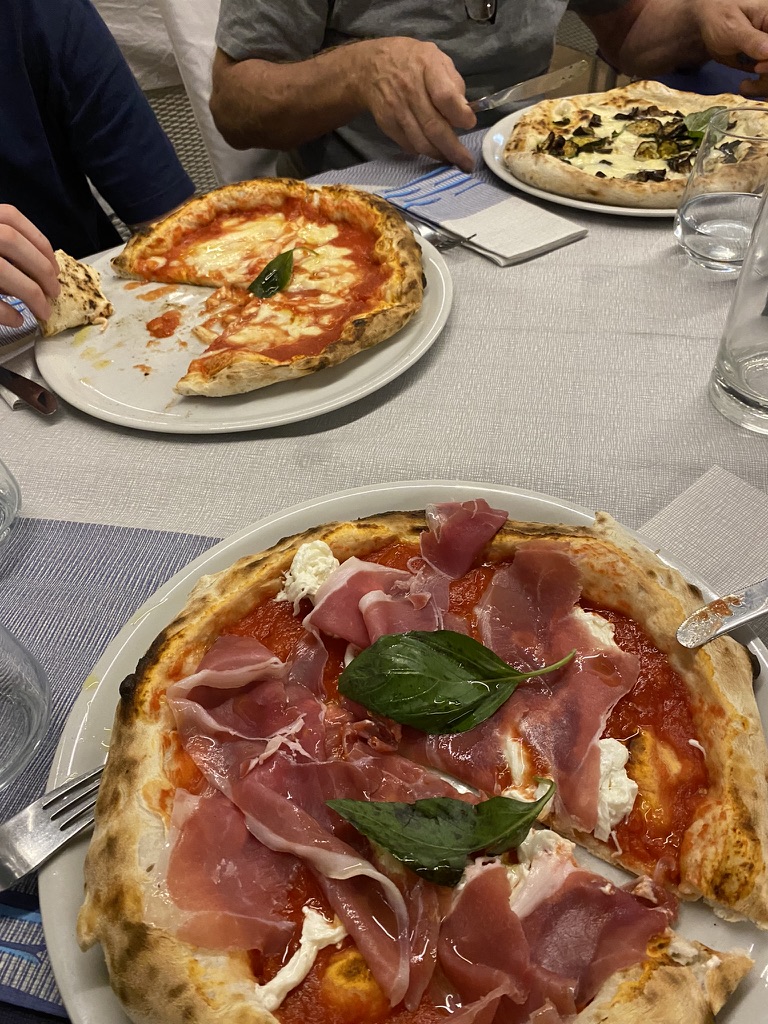
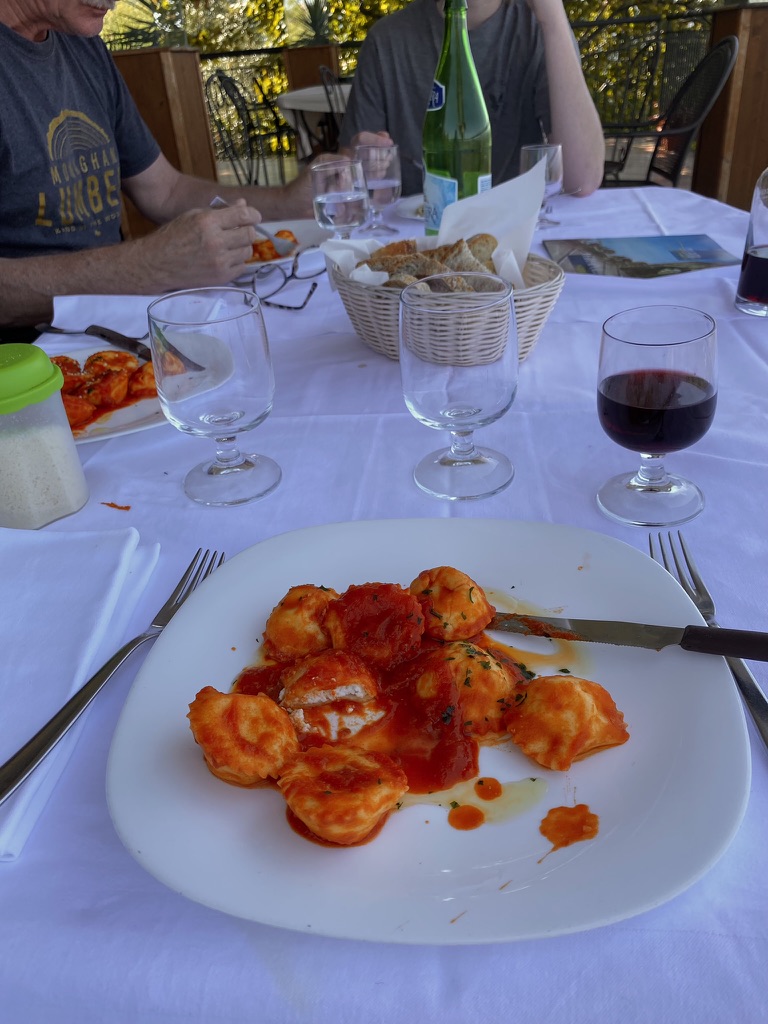
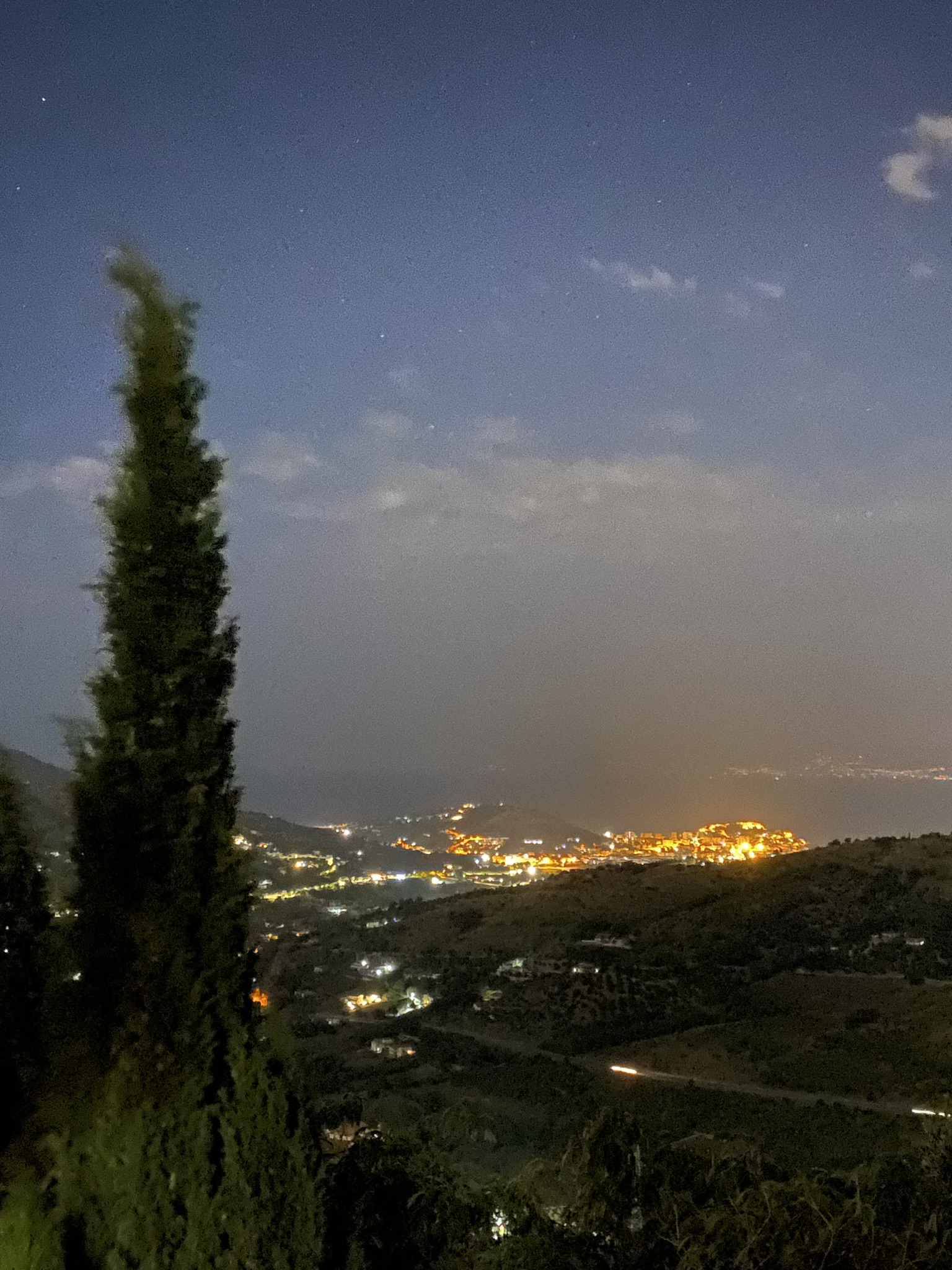
Our trip consisted of all fantastic things – a farm stay on a mountain, quaint stone buildings, a nonno waiter/concierge who wore slippers, pinched our cheeks and was quick to tears, and great food with an epic pizza party at the end of our stay. We were the only guests that week, which was also their last week of the season.
And if the warm turquoise waters of the Cilento Coast didn’t convince me of my clearly Italian heritage, the fresh buffalo mozzarella certainly did.
Despite my Scottish red hair and Irish complexion.
I regret that my plane-hating partner wasn’t able to join us, and I hope that someday I can convince him to visit with me. But at least he loves my sauce.
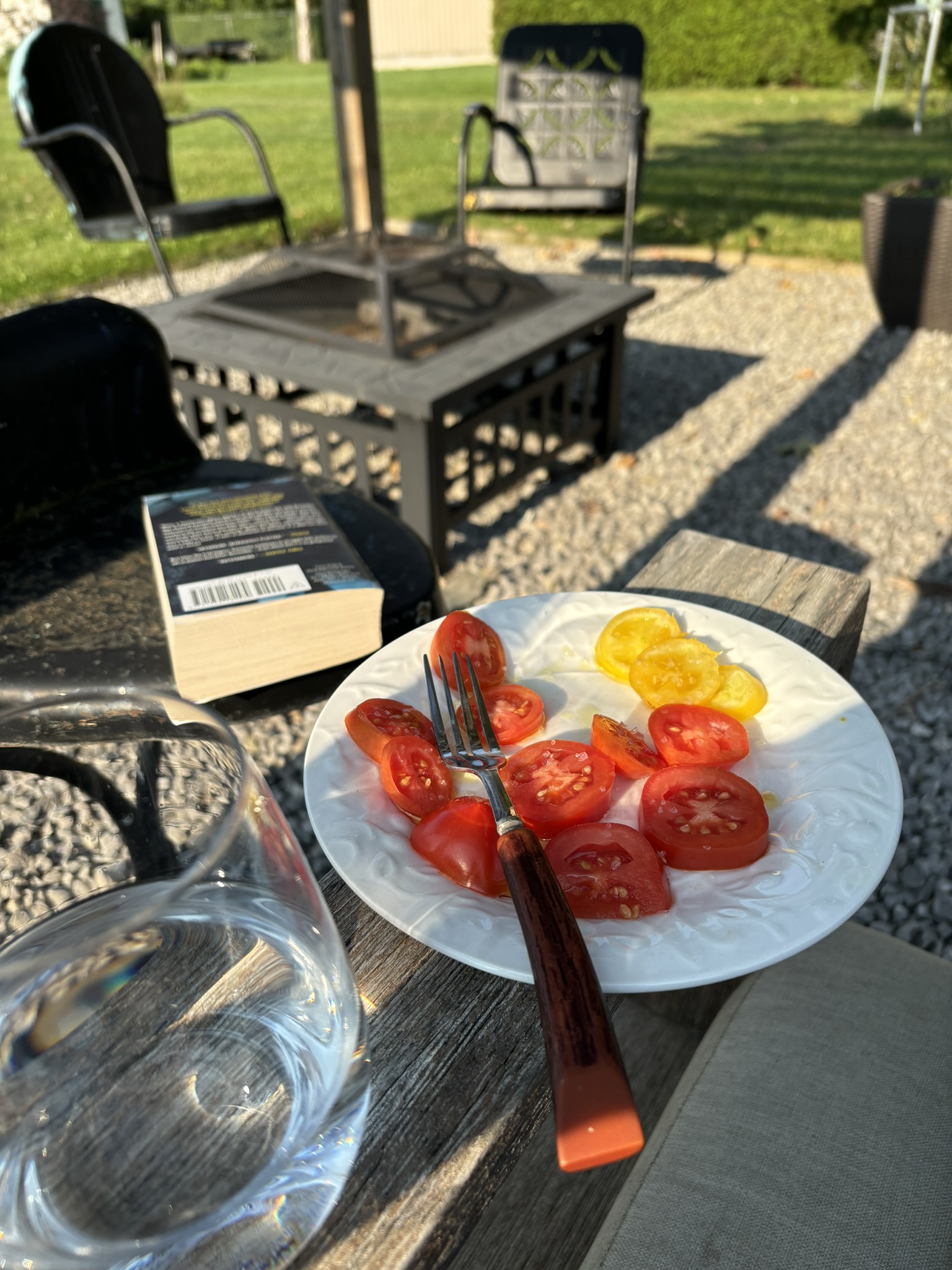
And so, here we are. It’s tomato season.
There will be tomatoes on the counter. Tomatoes in salads. Tomatoes waiting in the freezer. And, eventually, sauce for the winter.
This is one of the things I love about growing food: you stop thinking about tomatoes as something you can simply buy whenever you want them, and start thinking about them as a season.
And when tomato season arrives, you pay attention.
Simple Tomato Bruschetta
Sometimes the simplest ingredients make the best food. When I returned from Italy, I spent a bit of time trying to emulate the antipasti, especiallly the simplest, but best, bruschetta. While I’m not always sure I can find the best olive oil, I’ve landed on a brand that I think works well, and can pretend I’m back on the Cilento coast.
Ingredients
For the crostini:
- ½ baguette, cut into coin-shaped slices
- 1 clove garlic, peeled
- Good-quality olive oil, for drizzling
For the tomato topping:
- 2 cups cherry tomatoes
- 1½ Tbsp good-quality olive oil
- Kosher salt, to taste
Instructions
- Arrange the baguette slices on a baking pan and place under the broiler. Toast lightly on both sides, watching carefully so they don’t burn. Don’t ask me about the number of batches I’ve ruined.
- Remove from the oven and allow the toast to cool until it can comfortably be handled.
- Take the peeled garlic clove and rub it across the surface of each slice of toasted bread. As you rub, the garlic will begin to break down, releasing its juice and pulp onto the slice.
- Lightly drizzle each slice with good-quality olive oil. You don’t want the bread covered in oil—think more chocolate sauce on a sundae than a soaking.
A Note: You’ve Just Made Crostini
If you’d like to use a different topping—or no topping at all—you can stop here. My son who dislikes tomatoes does (I know, what?!). The toasted, garlic-rubbed bread is crostini, ready for whatever you would like to put on top.
Make the Tomato Bruschetta
- Finely chop the cherry tomatoes. I like to cut each tomato into quarters, then cut each quarter again. It takes a little time, but you don’t need much topping for each piece of toast.
- Place the chopped tomatoes in a bowl and mix with the olive oil and kosher salt.
- Spoon a small amount of the tomato mixture onto each slice of crostini.
Serve immediately and enjoy while the tomatoes are at their best.
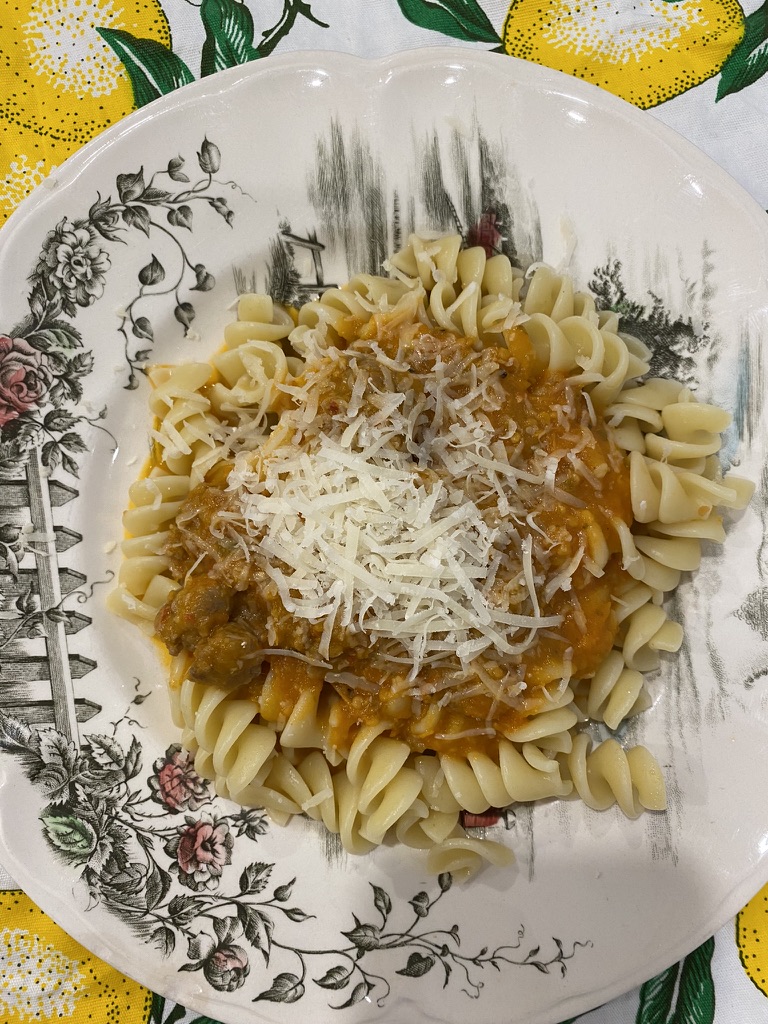
My Garden Tomato Sauce
Did I develop this recipe? No! Do I remember where I got it? Also no! Here’s what I can offer – no weight measurements. For one large jar of tomato sauce you need a large ziplock bag of tomatoes – fresh or frozen.
Ingredients
- 1 large Ziplock bag fresh or frozen tomatoes (or 2 × 28 oz cans whole peeled tomatoes)
- 5 Tbsp salted butter, or less, to taste
- 3 Tbsp olive oil
- 4 garlic cloves, peeled and minced
- 2 yellow onions, peeled and halved
- 1 tsp sugar
- 2 tsp oregano
- 1¼ tsp salt
- Freshly ground pepper, to taste
- 2 Tbsp chopped fresh basil
Instructions
- Prepare the tomatoes. If using frozen garden tomatoes, run them briefly under warm water to remove the skins.
- Place the tomatoes in a large pot and allow them to thaw completely. As they thaw, they will release a surprising amount of liquid. Let them sit for several hours if possible, then ladle off and discard as much of the excess liquid as you can. This helps create a richer, thicker sauce.
- Add the butter, olive oil, halved onions, garlic, sugar, salt and pepper.
- Bring the sauce to a gentle boil, then reduce the heat to low.
- Simmer gently for 1½ to 2½ hours, stirring occasionally.
- Remove the onions.
- Mash or purée the sauce to your preferred consistency. I like to purée part of the sauce and leave some texture intact.
- Stir in the fresh basil and oregano near the end of cooking.
Serve immediately, freeze for later, process in a water bath canner, or use wherever a good homemade tomato sauce is required.
A note on frozen tomatoes: This is one of my favourite garden shortcuts. Instead of feeling pressured to make sauce every time tomatoes ripen, I core them, freeze them, and deal with the sauce-making later. Tomato season can be busy enough already.




 Chickadee Jane
Leave a comment